


Should you add caravan storage to your self storage facility?
Making caravan storage perform for your facility means doing the due diligence and assessing if there's enough demand to justify it or if your space is better used for enclosed storage.

Written by
Australian Business Manager
6 min
Read time
05 November 2026
Last updated

Summary
Summary
- The demand is real, but a large national market isn’t a reason to build locally.
- RevPAM is the test: one 8×3m caravan bay earns less than the same space split into enclosed units.
- It works best filling idle land during approvals or between build stages, supporting enclosed storage.
- Security costs (fencing, cameras, alarms) can’t be phased in, so run the feasibility before committing.
- For land not ready to build on, relocatable 6×3m container storage is a secure, subdividable alternative.
What's covered
If you’re thinking about caravan storage, you’re probably looking at a regional site, a staged development or a section of land that could be working harder while the rest of your facility takes shape.
On paper, caravan storage looks like a simple way to turn that space into revenue. It’s a lower cost to set up than enclosed units, there’s visible demand in regional markets, and it can help bring in revenue while the broader development progresses.
The real question is whether that space would work harder as vehicle storage or as an enclosed facility.
The demand is real
There are almost 938,000 registered caravans and campervans on Australian roads – a 32% increase since 2019. Of all caravan and camping trips, 78% are taken in regional Australia.
If you're developing in a regional area, those numbers reflect genuine market demand. But demand for caravan storage and the case for building it are two different things.
You’re not assessing whether there's a market, but whether that market makes sense for your site.

There are over 900,000 caravans and campervans registered on Australian roads and with house block sizes shrinking, they are increasingly housed off-site.
What’s the space really worth?
The metric that matters here is RevPAM – revenue per available square metre.
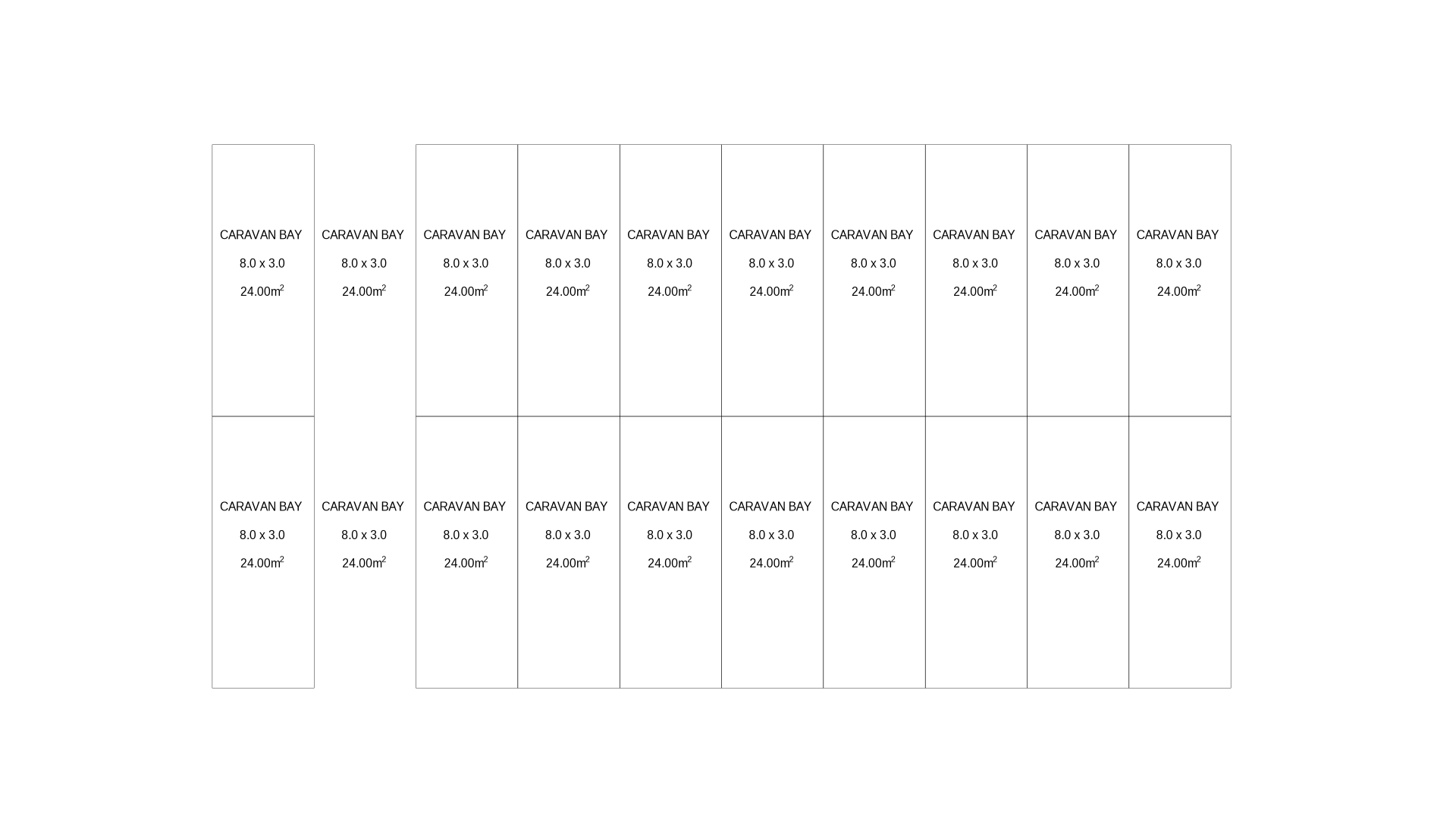
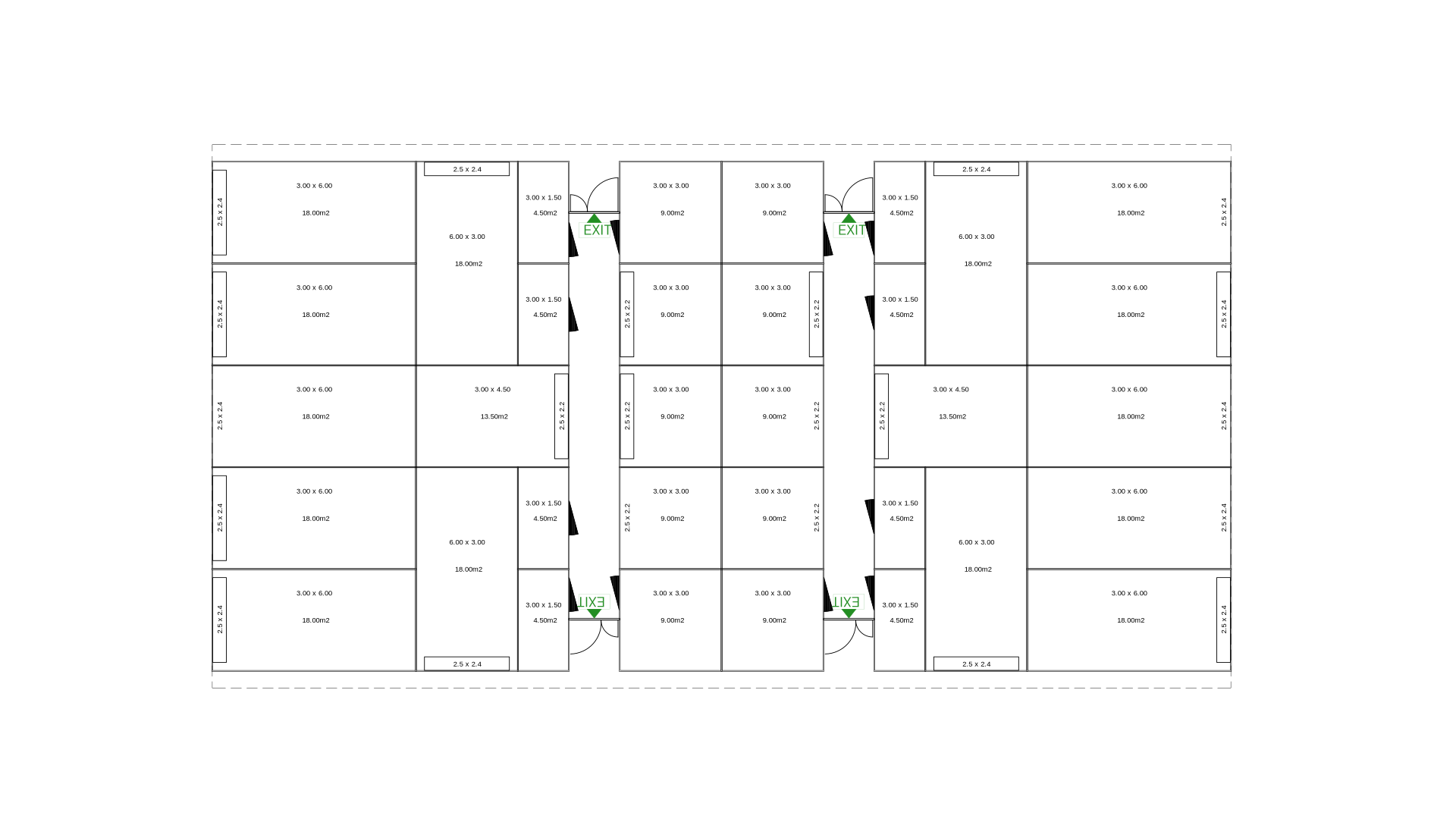
A caravan bay is large: an 8×3m space that serves one customer and generates one revenue stream. Enclosed storage, on the other hand, gives you more ways to earn revenue from the same footprint. That 8×3m space can be divided into multiple unit sizes and rented to multiple people at once.
A useful rule of thumb: when you halve a unit's size, you typically get around two-thirds of the rent. Put simply, smaller units offer greater potential revenue that larger ones, so storage developers are well advised to assess the number of 3×3 and 3×1 units their facility can sustain.
The SSAA Industry Snapshot 2025 puts the average storage fee rate across major metropolitan markets at $394 per square metre per annum.
Unit size | Monthly rent | RevPAM per year |
8×3m (caravan) | $525 | $262 |
6×3m (4br home) | $443 | $262 |
3×3 (2br home) | $296 | $394 |
3×1.5m (personal effects) | $197 | $525 |
Both storers and facility owners benefit from a variety of smaller unit sizes. | ||
Open, covered or enclosed: what's the difference
Not all caravan storage is the same. Open storage – bays on hardstand or compacted gravel, with perimeter fencing and security – is the lowest-cost option to set up and the most compatible with the two scenarios described below.
Covered and enclosed storage both require some form of structure to house the vehicles, which adds cost and changes the feasibility equation.
Two scenarios where caravan storage makes genuine sense
Getting a self storage development through the planning process can take up to two years. That's two years of holding costs on land that's sitting idle. Open-air caravan storage requires minimal capital – hardstand or compacted gravel, perimeter fencing, security – and it can generate income while your approved development takes shape.
The second is staged development. Staged builds are common in self storage as they let you spread out the capital costs over time: develop the first stage, let it fill, then build the next. While the next stage is waiting to be built, caravan storage can help that part of the site earn its keep.
In both scenarios, caravan storage isn’t replacing any permanent storage buildings. It’s supporting it, by helping the land work harder until the next part of the facility is ready.

Caravan storage can make sense when you already have a concrete slab and are in between building stages
Before you commit, run the feasibility
Open-air caravan storage has a lower upfront cost than enclosed construction. The costs people often underestimate are the ongoing ones.
Caravan storage needs perimeter fencing, cameras, access control and alarm systems. These aren't costs you can phase in later – they need to be in the numbers from the start.
The costs need to be assessed before any space is set aside. Look at what the site will cost to prepare, what it will cost to secure, how many bays you can realistically fit, and how full it needs to be before the return starts to make sense.
From there, you can see whether caravan storage is helping the site perform or holding back a more valuable use of the space.
We recommend commissioning a proper feasibility study to assess the long-term viability before committing to a layout. From there, you can see whether caravan storage is helping the site perform or holding back a more valuable use of the space.
Risks worth factoring in
Batteries
Battery fires are a known risk in self storage. The risk to your facility in open-air caravan storage is lower than in enclosed facilities, simply because there's no structure to burn. That said, a battery fire in a caravan can still catch neighbouring vehicles. The SSAA has specific guidance for members on batteries in storage.
Bailment
If you hold keys to a storer's vehicle, you hold legal responsibility for it. A NSW Court of Appeal decision confirmed that possession of a vehicle's keys establishes a bailment relationship - and with it comes a duty of reasonable care. The practical upshot for operators: have a clear policy on keys, make sure your occupancy agreement addresses liability explicitly, and ensure storers have their own insurance before they sign.
A practical alternative to consider
If you're thinking about caravan storage primarily because part of your site can't accommodate permanent construction, container storage is worth considering.
Unlike repurposed shipping containers, these are secure, relocatable 6×3m structures that can be positioned on site without the need for a permanent building and still look good. They're not a substitute for caravan storage – you can't store a caravan in one – but they can offer enclosed, secure storage on land that isn't ready to build on yet.

Container storage can be a valuable alternative to caravan storage by trading vehicle storage space with secure, temporary, and subdividable containers.
Before you make the call
Caravan storage is worth exploring if:
- You're developing in a regional area with measurable local demand and limited competing supply.
- Land would otherwise sit idle during council approval or between build stages.
- You have an existing or planned enclosed unit mix as the primary revenue base.
- You've run the feasibility numbers and they stack up at realistic occupancy.
Approach with caution if:
- You're treating it as a primary revenue line rather than a complement.
- You're in a metro area where land costs make the RevPAM maths unworkable.
- You haven't modelled security costs in the feasibility.
- You haven't addressed the legal exposure around keys and bailment in your occupancy agreement.
Where caravan storage fits
Caravan storage can make sense. It just needs to have the right role in the facility.
If the land is regional, the demand is there and part of the site would otherwise sit unused during approvals or between stages, it can be a sensible way to bring in revenue earlier. The mistake is treating it as the strategy, rather than something that supports it.
A well-structured facility is still built around enclosed units, with caravan storage filling the gaps, not the other way around.
Planning a self storage facility with caravan storage in mind?
Storco can help you think through the unit mix, site layout and what makes sense for your specific block before you commit to anything.
Talk to your local sales team
Every Storco project starts with a real person, not a form. If this raised questions about your own site, [Name] is the person to talk them through — on the phone, on site, whatever suits.

Related reading
When should you use a shed builder?

- Property development
Shed builders seem like the logical choice if you're after a simple facility that's up and running sooner. There are definitely circumstances where a shed…
